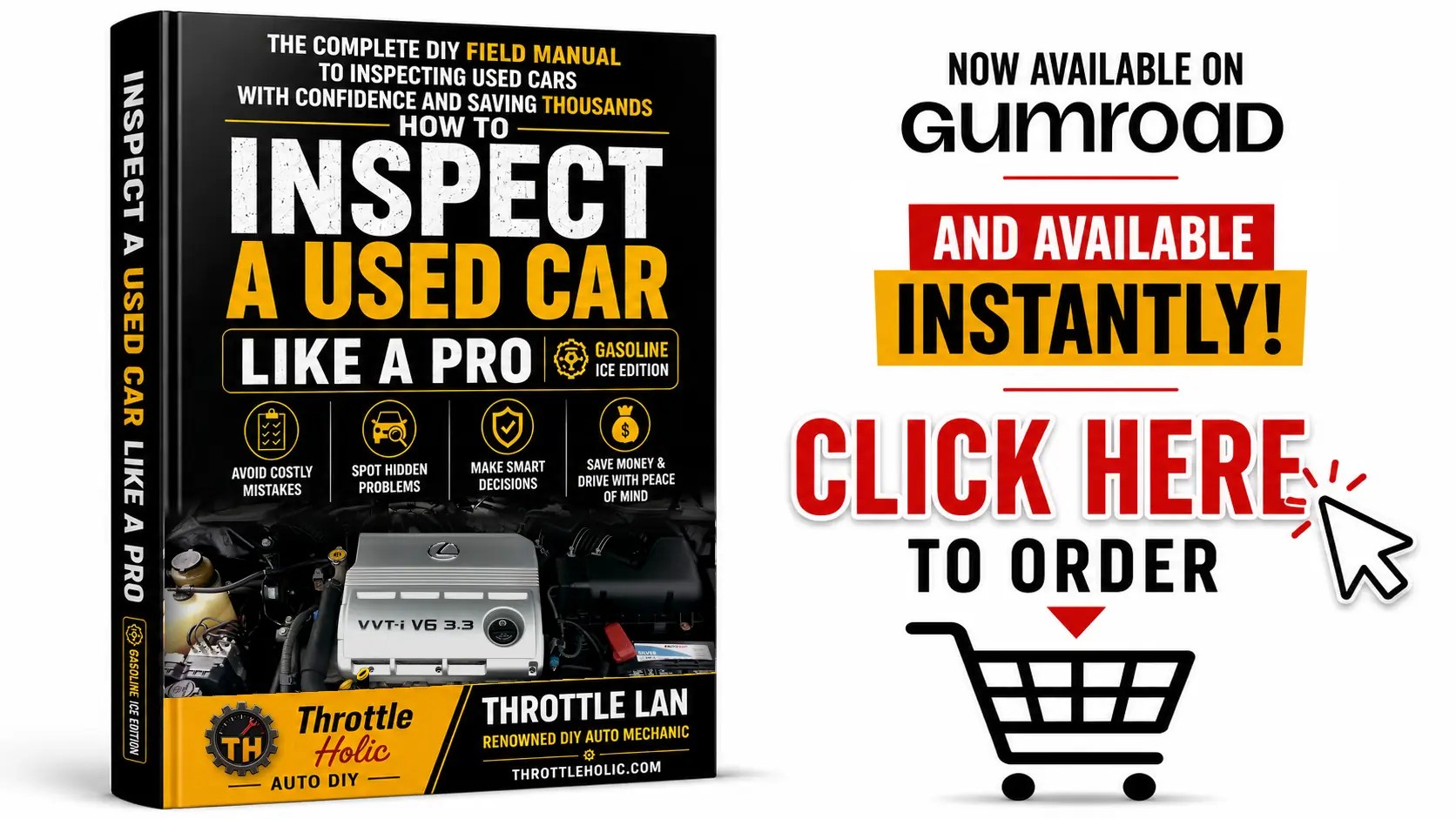
I n my used car pre-inspection field manual, I argued that fewer things in life are more embarrassing than a vehicle that routinely decides it needs to take a break. It’s worse when that break time coincides with when you have somewhere important to be.
In an ideal world, an easy way out would be to buy a brand new car. Unfortunately, for many of us, that isn’t possible. This leaves us with vehicles drawn from the used car lots.
Unfortunately, too, most cars offered for sale today aren’t fairly used – or even used in the strict sense of the word…they’re ABUSED. THOROUGHLY.
The Challenge of Pre-Purchase Car Inspections
Mechanics are awesome folks (my problem has always been with engineers). And, I say this not because I’m a mechanic myself. Rather, I say it because it’s the truth.
The reality of coming to work, day after day, and fixing the negligence of careless vehicle owners or having to deal with the less-than-inspired designs of half crazy engineers is what, ideally, should be worthy of all our respect.
But mechanics are human too. Sometimes, they’re simply unavailable to run used car checks, which makes it possible to miss a great deal to a ready buyer simply because your mechanic of choice was wrenching his ass off, rebuilding an M274 engine with a shattered block, mashed pistons, and troubled connecting rods.
But, My Mechanic is Always Available & Trusted…
A mechanic who is always available is even less desirable than one who is always busy: that a mechanic is always available signifies a lack of skill in their trade and, importantly, an unqualified reality to run a used car pre-purchase inspection.
But let’s ignore that part, for a moment…assuming this always-available mechanic of yours runs your used car checks, they’re going to charge you per inspection, whether you buy or not.
At an average of about $200 per inspection and the array of bad vehicles one must navigate to get to the great ones, you’ll easily spend thousands of dollars before getting what you want…thousands of dollars not in payment for the vehicle of your heart but to line the pockets of a mechanic so average that they’re ALWAYS available.
So, what’s the solution? It turns out, I discovered it: How to Inspect a Used Car Manual Like a Pro.

How to Inspect a Used Car Like a Pro
When I started inspecting used vehicles for friends and family, decades ago, I was barely out of my teens.
At inspections, dealers, private sellers, and their families all had a way of looking down at me. However, because I genuinely love cars and they have been a passion of mine since I can remember, I always got (and still gets) every inspection right.
The cars I rejected were rightly rejected. The ones I accepted, based on my rigorous standards, stood the test of time and their owners became repeat clients of mine, referring me to even more business.
It’s from here (and my delving into auto repairs) that I have, through the years, developed a system of inspecting used cars. That system is what has been reduced in writing as the most definitive and authoritative field manual on buying a great used car (yet).

What’s Inside (9 Chapters, Sequentially Sorted)
When I sat down to reduce my experience with used car checks, it married beautifully with the fact that I’m a full DIY auto mechanic, handling all my vehicle repair needs, and I understood one thing perfectly.
I wasn’t writing for my comrades in wrenches, nor was the manual targeted at those who could handle their own pre-purchase inspections (or have already been doing so).
Instead, from the grammar, style, layout, and delivery, it was clear that I had the complete beginner in mind: no jargon, simple lines, and basic, forward explanations.
The book is laid out in the format below:
- Paperwork & Title: VIN matching, title checks, vehicle history reports, lien and theft checks — and the seller excuses that should stop you cold.
- First Impression & Walk-Around: reading paint, panel gaps, tyres, doors, and VIN stamps for the small inconsistencies that reveal accident history.
- Interior, Instrument Cluster & First Start: why the cold start matters, what the dashboard self-test tells you, and how to read wear against claimed mileage.
- Under the Hood: oil, coolant, belts, battery, and leaks — including the exact signs of a failed head gasket most buyers walk right past.
- The Trunk: the most-skipped ten seconds of any inspection — spare tyre, water damage, and signs of a rear-end collision.
- The Test Drive: a structured route through acceleration, steering, braking, highway speed, suspension, and parking that surfaces real problems.
- Undercarriage: what sellers hope you never look at — frame condition, leaks, exhaust, suspension, and brake lines from below.
- OBD-II Scanning: how to bring your own scanner, read fault codes, and know when a seller has quietly cleared the memory.
- Your Final Decision: how to separate acceptable wear from serious risk, negotiate with confidence, and decide with evidence, not emotion.
As it’s already clear, this isn’t your average garbage manual on used-car inspections: this is a methodological, practical offering that shows you how to run your own pre-purchase car inspections as if you’re a pro (even when you’re clearly not).
The Confidence Boost…
I understand that cars can be overwhelming, especially for the beginner. So, to inspect them properly (and with confidence), a confidence boost is essential.
This is why every chapter ends with a three-checkpoint system, complete with what should EXACTLY trigger your next move.
CONTINUE — Everything checks out. Move to the next stage with confidence.
PAUSE AND INVESTIGATE — Something deserves a closer look before you go further.
WALK AWAY — A clear red flag. The manual tells you exactly when to leave.
As if this isn’t confidence enough, I also have a list of common seller excuses for each chapter, excuses I’ve summarized from my own years of inspecting used vehicles and dealing with hundreds of less-than-honest owners/sellers, salesmen, and dealers.
No gut feelings or emotions whatsoever. Just a clear call at every stage, inspired by time-tested field experience.
What You’ll Be Able to Do (With this Field Manual)
- Verify a VIN and title in under five minutes.
- Spot a hidden accident repair from paint and panel gaps.
- Read a cold start for the problems a warm engine hides.
- Check oil and coolant for signs of expensive internal damage.
- Run a test drive that exposes transmission and suspension issues.
- Pull and read OBD-II codes yourself, without trusting the seller’s scanner or account.
Printable Checklists
Every chapter ends with a checklist so you’re not trying to remember 80 details standing in a stranger’s driveway. Covers paperwork, walk-around, interior, engine bay, trunk, test drive, undercarriage, and OBD-II — all done for you and ready to use.
The greatest part? There’s a 7-page master checklist at the end of the field manual, containing all the individual chapter checklists and, importantly, a point-scoring system for scientifically deciding, free of any emotions, whether to proceed, pause and investigate, or walk away.
Honestly, I wish I had this sort of material at my disposal when I was starting.
Is This for You?
As practical as this field manual is for buying great used cars, it’s not for everyone. If you fall under any of the items listed below, you may not need it.
- If you only buy new cars. Obviously, you’re covered by an extensive warranty, so you won’t need this field manual.
- Since this is a gasoline ICE edition, you won’t need the manual if you’re interested in inspecting an electric or a diesel car. These would be covered in a separate, later field manual.
That’s it…nothing more.
In the rare event that you have a trusted mechanic who is already handling all your pre-purchase tasks, it still makes sense also to know what the mechanic is looking for during such an inspection.
This knowledge will help you decide smartly if, due to no fault of his, the mechanic makes a mistake.
Why leave such an important life decision to another when you’re the one ultimately signing the check (especially when the field manual also pays for itself on the very first inspection)?
Love the Above? Subscribe for More

Throttle Lan
DIY Mechanic and Freelance Auto Writer